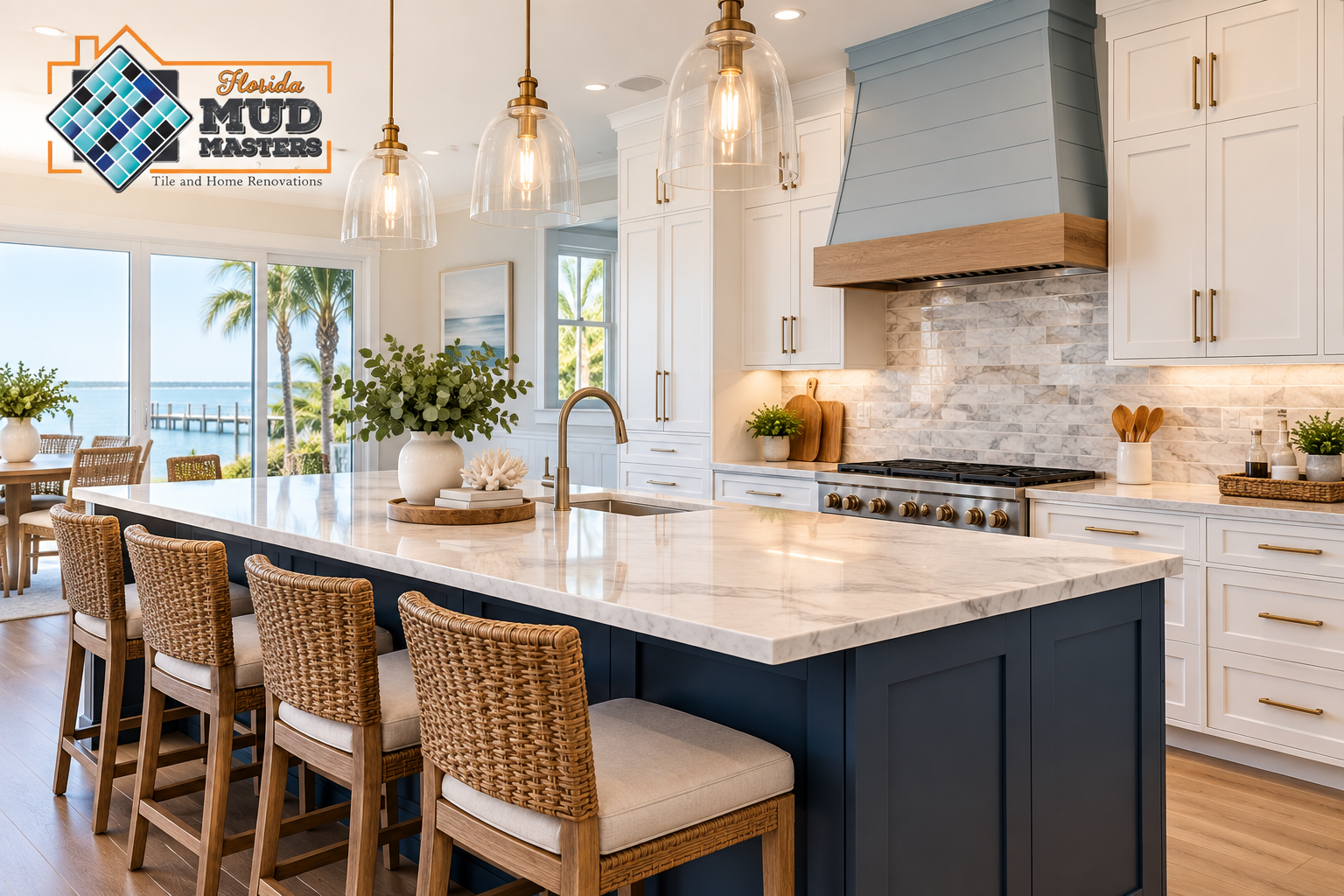
There’s a specific look that luxury coastal kitchens share, light, airy, and effortless looking, even though achieving that feeling actually requires careful, intentional design choices at every level. A luxury kitchen remodel in Fernandina Beach, FL gives homeowners the opportunity to build exactly this kind of space, one that feels elevated and high end while still reflecting the relaxed character that makes coastal living so appealing in the first place.
Here’s how to think through the key design elements that come together to create a genuinely luxury coastal kitchen.
Start With a Cohesive Color Palette
Soft, Natural Tones
Luxury coastal kitchens tend to favor soft whites, warm creams, and muted blues or greens, colors that evoke the surrounding coastal environment without feeling overly literal or themed. This palette creates a bright, airy foundation that feels both sophisticated and relaxed.
Natural Material Tones
Incorporating natural wood tones, whether through flooring, open shelving, or cabinetry accents, adds warmth and texture that balances out lighter, cooler color choices elsewhere in the space.
Choose Cabinetry That Balances Elegance and Ease
Shaker Style or Clean Lined Cabinetry
Simple, clean lined cabinet designs tend to suit the coastal luxury aesthetic better than heavily ornate styles, offering a refined, timeless look that won’t feel dated as trends shift.
High Quality, Coastal Appropriate Finishes
Selecting cabinetry finishes designed to hold up well in Fernandina Beach’s humid environment ensures your investment doesn’t just look luxurious initially, but continues to perform well over the long term.
Statement Islands
A large, well-designed island, sometimes finished in a contrasting color or material from the surrounding cabinetry, often becomes the visual and functional centerpiece of a luxury coastal kitchen.
Prioritize Natural Light and Openness
Larger Windows or Strategic Placement
Maximizing natural light is central to the coastal luxury look, larger windows, or windows positioned to capture optimal daylight, help create the bright, open feeling that defines this style.
Open Concept Layouts
Where feasible, opening the kitchen up to adjacent living or dining spaces enhances the airy, connected feeling that luxury coastal design tends to prioritize.
Select High End, Climate Appropriate Materials
Natural Stone or Premium Quartz Countertops
Materials like marble or high quality quartz bring a genuinely luxurious feel, and quartz specifically offers strong durability against the humidity common in coastal environments.
Statement Lighting Fixtures
Thoughtfully chosen pendant lighting or a statement chandelier over an island adds a refined, elevated touch that significantly impacts the overall feel of the space.
Quality Hardware and Fixtures
Details like cabinet hardware and faucet finishes, brushed brass, matte black, or polished nickel, contribute meaningfully to the overall sense of luxury, and should be selected to coordinate cohesively throughout the space.
Incorporate Coastal Inspired Textures
Natural Fiber and Woven Elements
Subtle textural details, whether through lighting fixtures, bar stools, or decorative accents, add depth and interest without overwhelming the clean, elevated aesthetic.
Organic Stone or Tile Backsplashes
A well chosen backsplash, whether natural stone, handmade tile, or a subtly textured material, adds visual interest while reinforcing the coastal inspired palette.
Why Working With an Experienced Local Designer Matters
Achieving a genuinely luxury coastal look, rather than something that reads as generic or overly trend driven, benefits significantly from working with a team that understands both high end design principles and the practical realities of building in Fernandina Beach’s specific climate. This combination ensures your kitchen looks elevated today and continues performing well for years to come.
Balancing Luxury With Practicality
While the aesthetic goals matter significantly in a luxury remodel, functionality shouldn’t be sacrificed for style. Thoughtful storage solutions, a well planned workflow between key areas, and materials chosen for both beauty and durability all contribute to a kitchen that’s genuinely luxurious to actually use, not just to look at.
Final Thoughts
Designing a luxury coastal kitchen for your Fernandina Beach home comes down to thoughtfully combining a cohesive, soft color palette, clean lined cabinetry, ample natural light, and high end, climate appropriate materials. When these elements come together intentionally, the result is a space that feels genuinely elevated while still reflecting the relaxed, coastal character that makes this area so special.
If you’re ready to design your luxury kitchen, Florida Mud Masters offers luxury kitchen remodeling services for homeowners throughout the Fernandina Beach area.
Frequently Asked Questions
1. What’s the difference between a standard kitchen remodel and a luxury one?
Luxury remodels typically involve higher end materials, more custom design elements, and greater attention to detail throughout, resulting in a more elevated overall look and feel compared to standard, more budget focused updates.
2. What colors work best for a luxury coastal kitchen?
Soft whites, warm creams, and muted blues or greens tend to work particularly well, creating a bright, sophisticated feel that reflects the coastal environment without feeling overly themed.
3. Is quartz a good countertop choice for a luxury coastal kitchen?
Yes, quartz offers a high end appearance while also holding up well against the humidity common in coastal climates, making it a popular and practical choice for this style.
4. How much does a luxury kitchen remodel typically cost?
Costs vary significantly based on materials, scope, and specific design choices, so a detailed, itemized estimate based on your specific vision offers the most accurate pricing picture.
5. Should I prioritize aesthetics or functionality in a luxury kitchen design?
Ideally both, a genuinely successful luxury kitchen balances elevated aesthetics with thoughtful, practical functionality, rather than sacrificing usability purely for visual impact.